Restoration of the Ocklawaha River by breaching Kirkpatrick Dam is a project of great concern to Mighty River Recovery. While our organization supports restoration and holistic management of freshwater systems throughout Florida, major ecosystem alterations must be carefully considered before actions are undertaken.
In the case of Ocklawaha River restoration, we find it necessary to scrutinize water impacts under the proposed action. As a major tributary to the St. Johns River, alteration of the existing Ocklawaha River system must be transparently investigated.
Our Consensus: Flow will increase.
Review of numerous studies and reports conclude that, under a restored Ocklawaha River, watershed spring flow will increase leading to more water coming to the lower Ocklawaha and St. Johns River. In addition, evaporation occurring throughout Rodman Reservoir would be reduced under Ocklawaha River restoration, adding more water to the system.
Our organization has reviewed data from various reservoir pool stages and believes flow will increase as a result of the proposed restoration project. Quantitative measures of flow increase are unclear, as spring flows across the region have been significantly reduced from historic levels, and much data and reporting have been calculated from flow levels no longer relevant. Regardless, flow increase may aid in vegetation restoration, increase thermal refuges for manatees and help restore fish and wildlife habitat.
It’s important to point out that, after extensive data review, Mighty River Recovery does not believe increased water coming to the system as a result of spring flow increase will improve water quality of the St. Johns River.
Our Consensus: Water quality will decrease.
Many waters in this region are defined as impaired by the Florida DEP due to nutrient pollution. For example, Silver Springs now features nitrogen pollution levels over 3000% higher than natural levels (FL Springs Institute). Phosphorus levels for this system also exceed safe thresholds established by the Florida DEP.
As waters from Silver Springs combine with those from the Ocklawaha River, they move into Rodman Reservoir. There, shallow, fertile zones promote large-scale plant growth, resulting in thousands of acres of herbaceous wetlands. Plants in those wetlands grow rapidly as they uptake nutrients from the water and soil. The results is nutrient reduction in waters moving through the reservoir.
In the majority of data sets we’ve organized or reviewed, nutrient levels in waters above Rodman Reservoir were significantly higher than levels from water below Kirkpatrick Dam, during the same period.
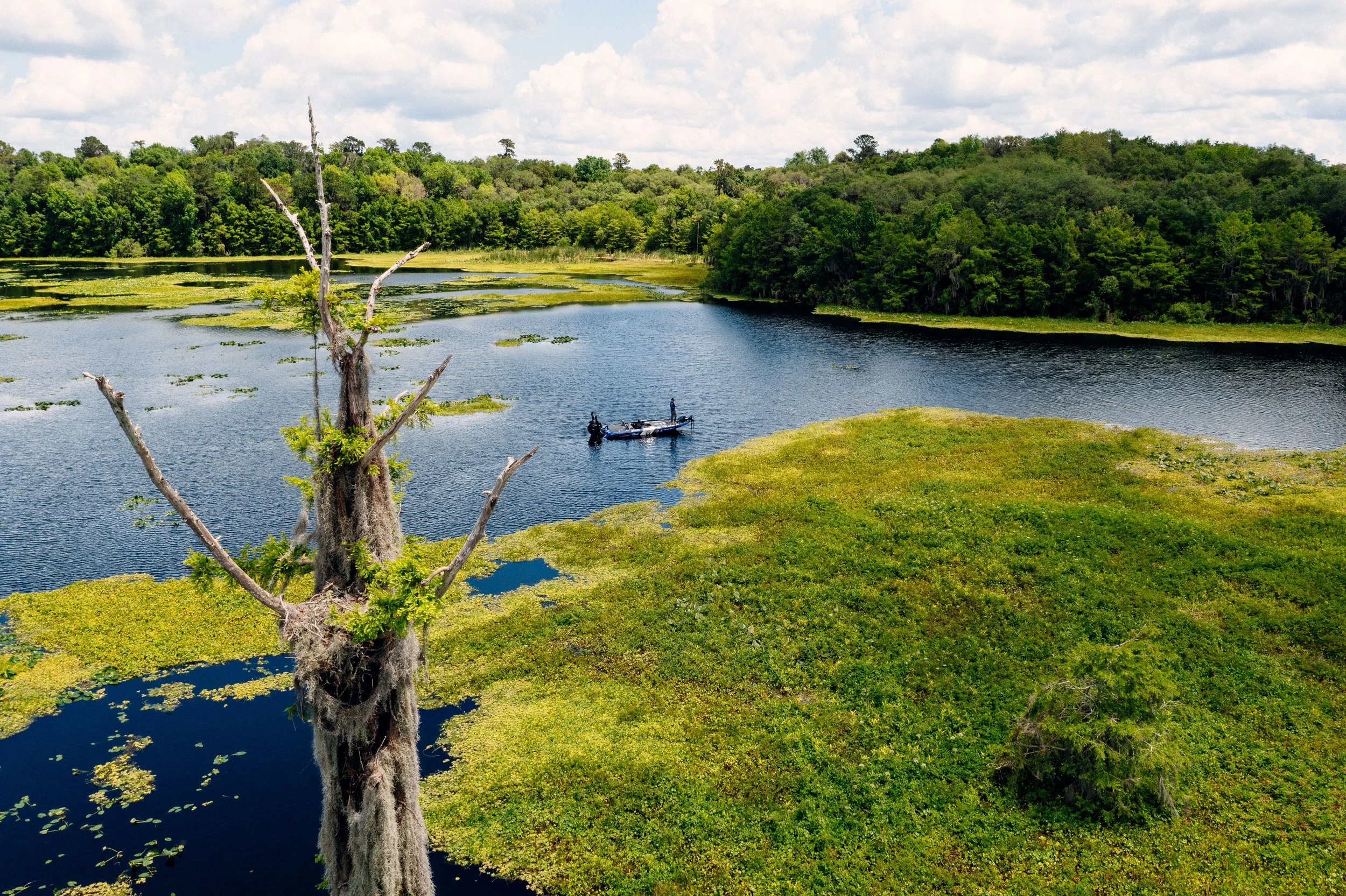
Rodman Reservoir plant communities
In addition, as reported by the SJRWMD, phosphorus levels in the lower Ocklawaha River are higher during reservoir drawdown periods than during normal pool stages: “…drawdown phase TP load to the LSJR is increased by 2 to 3 MT over the reservoir condition.”
Based on this data and our understanding of nutrient dynamics in freshwater Florida, our organization believes that significant uptake of nutrients occurs within Rodman Reservoir in the form of plant growth. Plants assimilating nutrients include both submerged species like eelgrass and hydrilla, as well as emergent and floating plants including cattails, smartweed and water lettuce.
A review of data reveals the same. From the 2001 USFS Final Environmental Impact Statement, Ocklawaha River Restoration: “The water of the Ocklawaha River is …high in nutrients.” And “Plant biomass in the reservoir functions as a nutrient sink by assimilating nutrients and inhibiting their transport downstream.”
Comparing nutrient numbers at the Silver River confluence to downstream of Kirkpatrick Dam resulted in “a 90% decrease in dissolved nitrate + nitrite” and “a 66% decrease in dissolved phosphorus concentrations in the water leaving the reservoir.”
Our organization took this further by researching SJRWMD data for waters above Rodman Reservoir and below the Kirkpatrick Dam during the same periods. Again, the majority of data sets demonstrated a significant reduction in phosphorus for waters leaving the reservoir.
Nutrient reduction in water moving through Rodman Reservoir is further confirmed in a 2016 SJRWMD report: “Under the reservoir full condition, NOx concentrations decline rapidly downstream of Eureka. Total phosphorus also declined longitudinally through the reservoir…”
Furthermore, these nutrients could be permanently removed from the system through responsible management and mechanical plant harvest. Such management would provide beneficial habitat for fish and wildlife while establishing holistic measures and improving water quality in the Ocklawaha and St. Johns River.
Compounding the situation, the St. Johns River Water Management District has reported an estimated increase of over 11 metric tons of phosphorus to the St. Johns River each year if the Ocklawaha River restoration project moves forward. Our organization believes that the predicted increase in nutrients is due largely to the elimination of the wetland plant communities in Rodman Reservoir under the proposed restoration project and therefore the elimination of a nutrient sink. In addition, any level of additional phosphorus coming to the St. Johns River will act to worsen the nutrient pollution already within this system.
Our Consensus: Overall, the proposed project will harm the St. Johns River.
In summary, after extensive review of data and scientific reports, our organization believes that breaching or removal of the Kirkpatrick Dam is likely to result in damaging nutrient increases in the St. John River and declines in water quality. Such may lead to harmful algae blooms, further reduction of fish and wildlife habitat and decreased opportunities for native plant growth within the system.
For that reason, until studies determine the amount of nutrient uptake within Rodman Reservoir and construct a plan to remove those same nutrients through holistic (non-chemical) methods within a restored Ocklawaha and St. Johns River, our organization cannot support the proposed project, as we feel it would be detrimental to the waterbody we work daily to restore and protect.
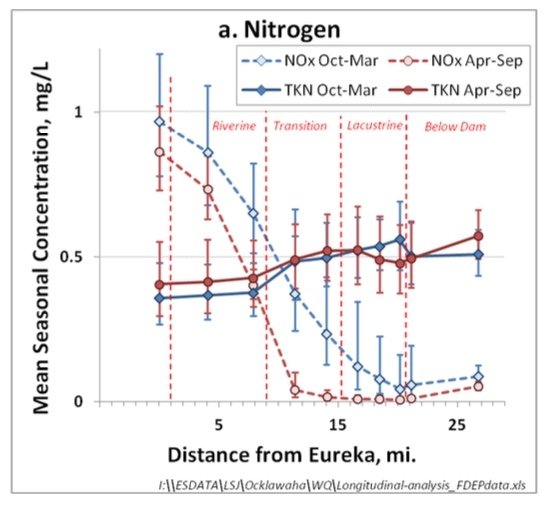
Nutrient reduction occurs through Rodman Reservoir
Our organization believes that any increase in flow to the St. Johns River from a restored Ocklawaha will not offset the potentials damage caused by additional nutrients coming into the system if Rodman Reservoir is eliminated. Furthermore, if the proposed project is carried out, we will advocate for clear, transparent water-quality monitoring to determine the effects of the project and insist on remediation of increased nutrient pollution coming to the St. Johns River.
We must make clear: Mighty River Recovery is not opposed to restoration of the Ocklawaha River.
We are opposed to any project likely to significantly decrease water quality in the St. Johns River and we believe the current proposed project falls within that criteria.
We invite readers to also review part two of this series, where we investigate likely impacts to fish, wildlife and their habitats under the proposed action.