Nutrient Pollution Testing
For over 60 years, aquatic herbicides have been used to eliminate invasive plants on the St. Johns River. In most of the middle and lower basin waters, this practice is carried out by the US Army Corps of Engineers.
Scientific data proves that the use of herbicides reduces water quality by increasing nutrients and pollutants, increases the occurrences of harmful algae blooms (HABs) , and increases the success of invasive, problem plants over native habitat.
Despite all of this, the only method used to control the majority of invasive plants on the state’s largest freshwater system is through herbicide spraying.
In 2026, Mighty River Recovery, along with Stetson University, began testing nutrient impacts following herbicide sprays.
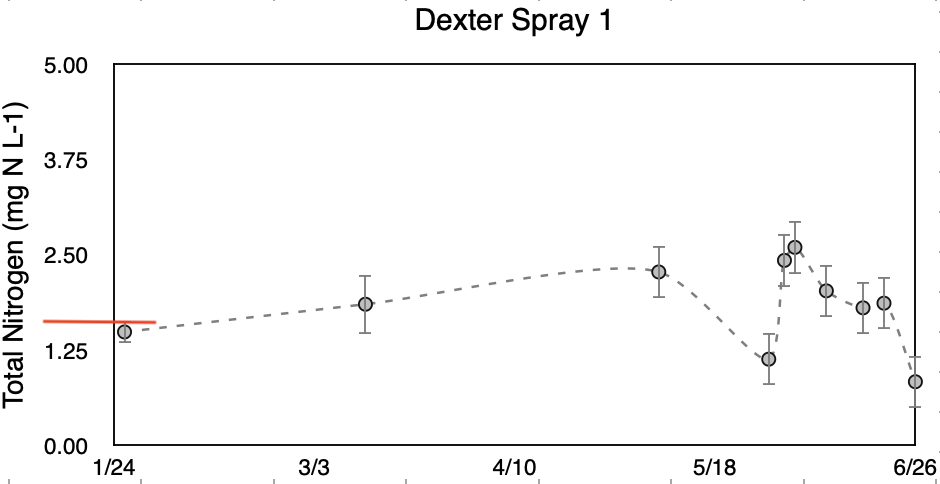
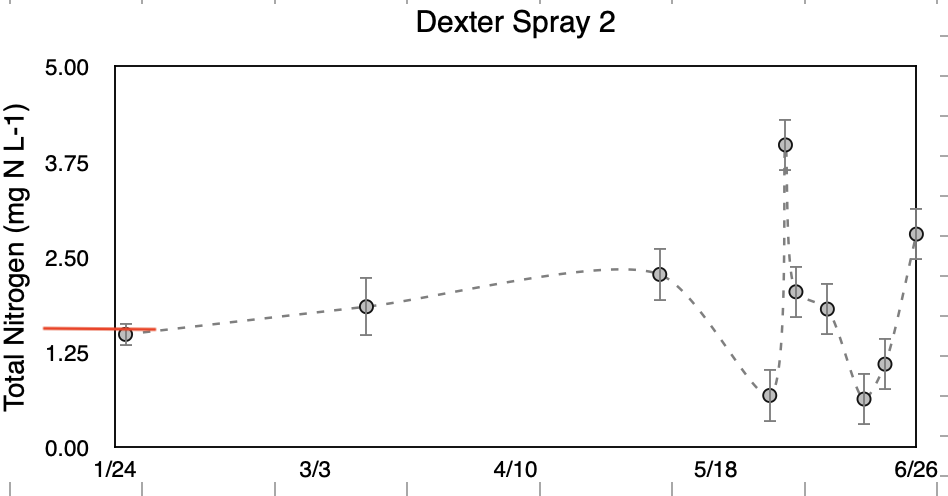
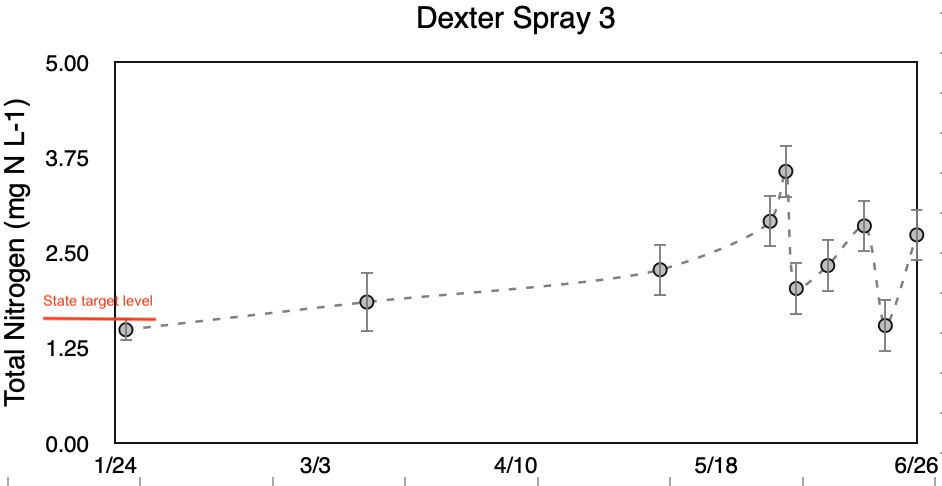
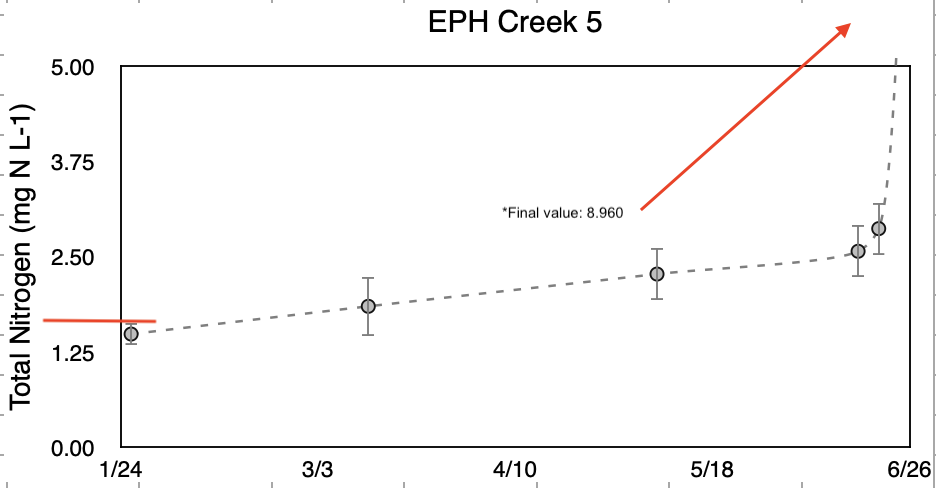
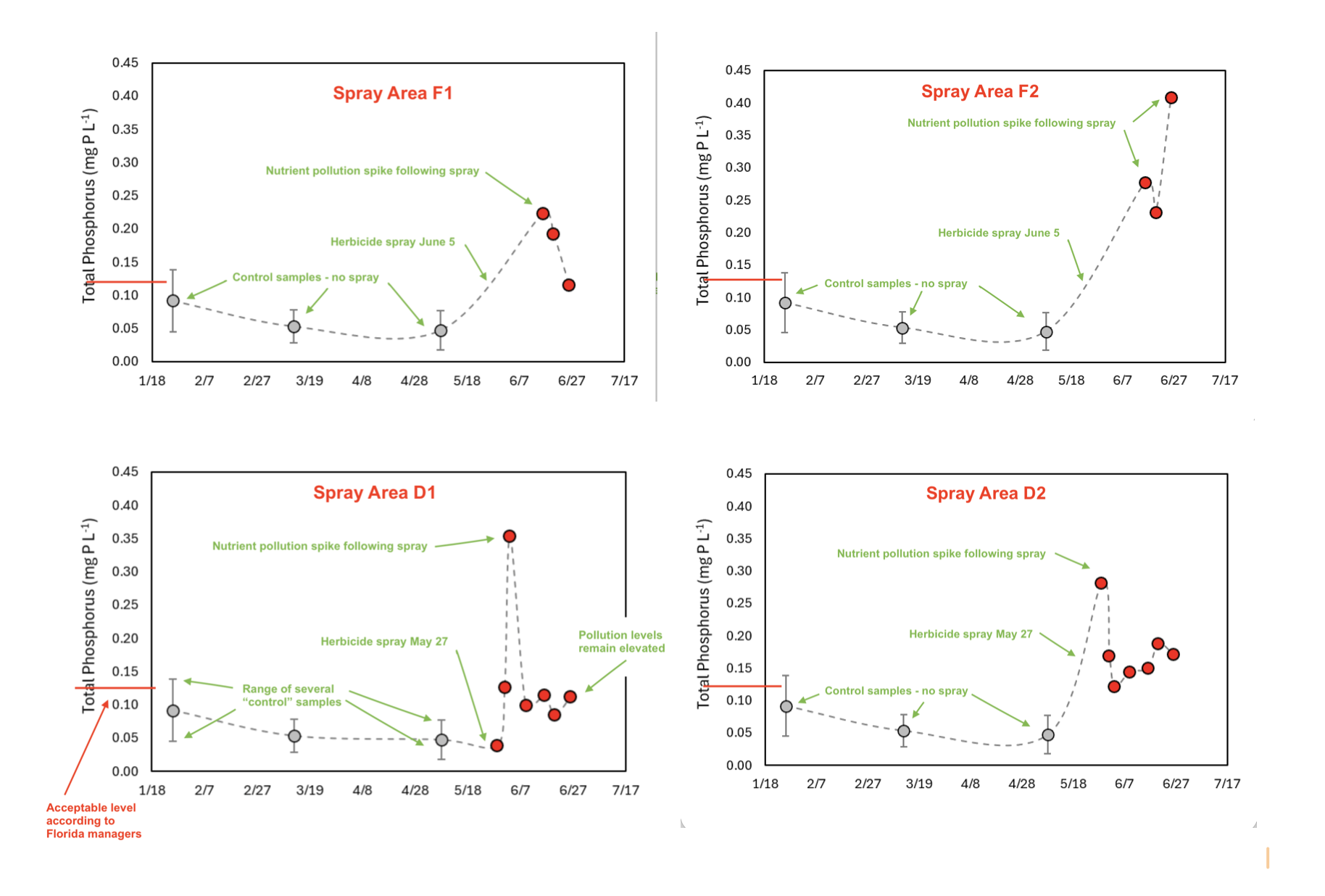
Below you’ll find the results of our initial tests. In each case, phosphorus pollution rose to dangerous levels following herbicide use.
Facts to point out:
“Control samples” were taken from a variety of areas in the same waterway, over a six-month period. They show no sign of pollution.
There was no major weather event or other activity in this area during testing period that would skew results.
Nutrient levels remain elevated - above safe standards - for months following treatment.
While aquatic herbicides aren’t believed to add nutrients, the use of these products instantly drives nutrients accumulated by plants back into the system. This “tidal wave” of pollution creates catastrophic ecosystem damage.
Our initial findings prove it: herbicide applications are leading to massive increases in nutrient pollution to our waterways. Often times, phosphorus increases over 500% within 36 hours of spraying activity.
Aquatic Herbicides are Polluting Our Waterways
We test for:
Ortho-phosphorus
Total Phosphorus
Nitrate + Nitrite
TKN
Total Nitrogen
Latest Results:
Phosphorus pollution:
Nitrogen pollution: